
A creative matrix crosses variation dimensions: audience, problem, angle and format. It helps select experiments rather than mechanically filling every cell.
One LEGO set, several fashion interpretations
Place the original post in a meaningful cell, then describe a different cell for your own product. Change the viewer’s problem or the evidence being offered. Merely changing production cosmetics would not test the matrix’s underlying idea.
- FORMAT
- Object → visual reinterpretation
- PRODUCT’S ROLE
- LEGO objects provide the visual source material for the fashion idea.
A viewer who enjoys recognising an object in a surprising new form.
- 01
Make the reference recognisable
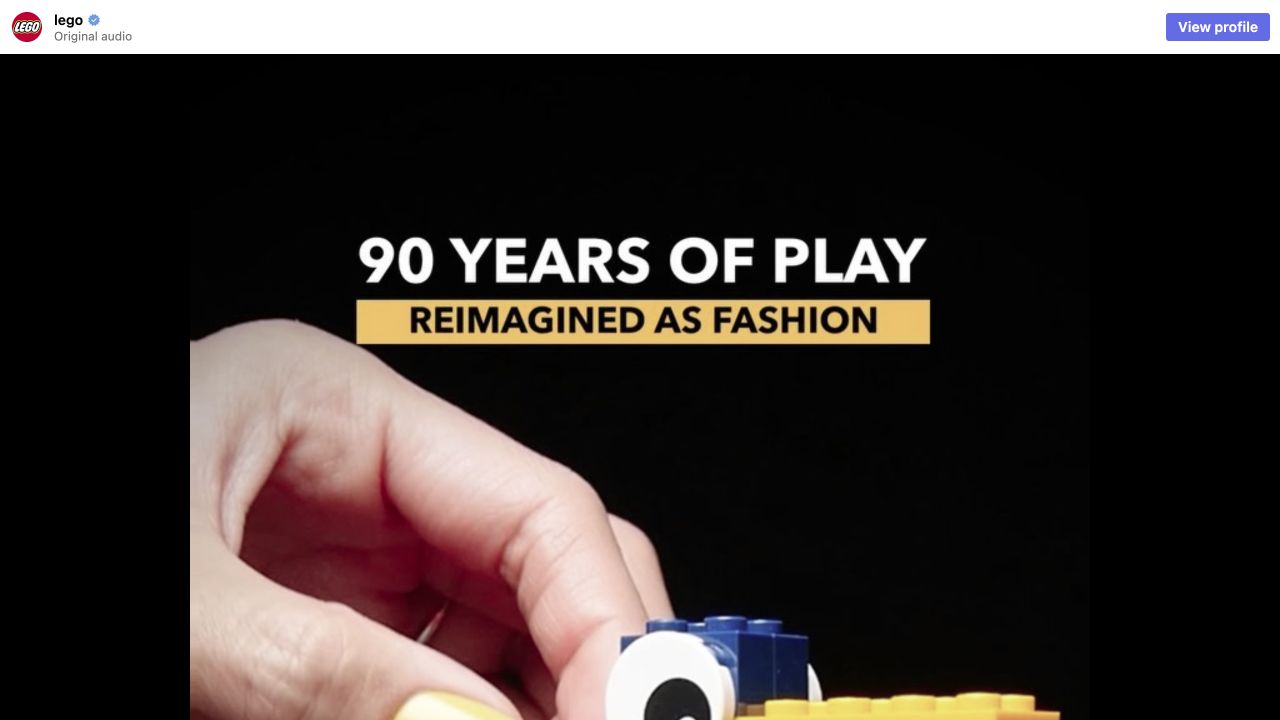
The Reel shows a small LEGO duck with a long yellow beak and coloured body.
Our read. A transformation only rewards recognition when the original is clear. If the viewer cannot identify the source, the reveal loses the comparison that makes it satisfying.
- 02
Carry a few cues across
The inspected Reel moves between LEGO objects and fashion imagery.
Our read. The useful exercise is choosing which colours, shapes or proportions survive the change of medium. Randomly changing the backdrop would not create the same relationship.
- 03
Make the difference visible
The saved fashion frame makes the reinterpretation available for comparison with the toy.
Our read. A second version can earn attention by explaining a new aspect of the same source. That is a more useful creative distinction than counting exports from one template.
One product, three different proof devices.
Original concepts for a voice-notes app. A proposal to test.
“The same messy idea, rescued three ways.”
- Show on screen
- Use one recording you own. Make a tutorial that shows the operation, a before-and-after that shows the cleaned note, and a short scene that shows somebody using the note later. Label these as separate concepts in the creative sheet.
- Keep the mechanism
- A shared source and a difference the viewer can actually recognise.
- Make it yours
- What the viewer learns from each version. A new font, actor or colour alone is not a new use case.
- What to record
- Give concepts and versions different IDs. Review audience questions and downstream actions by concept before choosing a cosmetic winner.
Source & observation notes
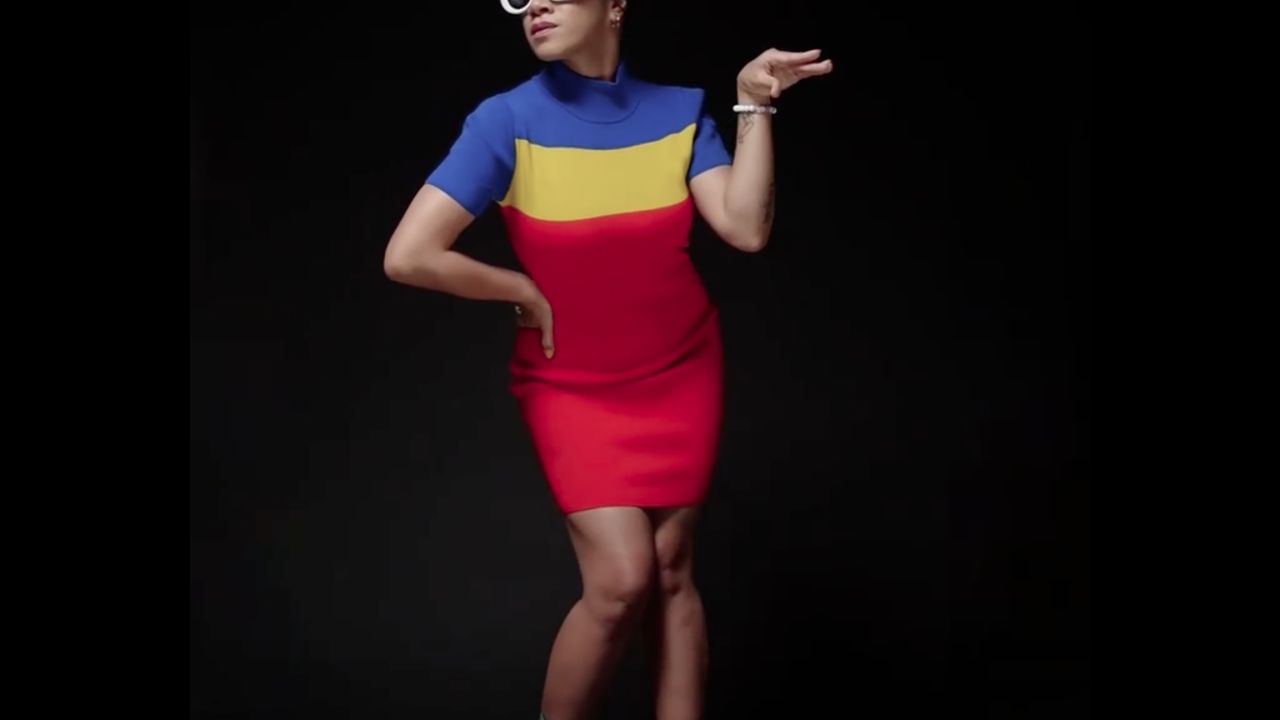
A wheeled multicolor LEGO duck is followed by a model in a blue/yellow/red block-color dress and white glasses. Later observed a red dress with an orange belt and a green top with black skirt and jacket.
The first visible transition translates the toy’s recognizable colors into clothing, giving a clear visual connection between source object and reinterpretation.
Verifies a Reel on LEGO’s official account and the reported fashion premise. It does not verify sales, audience overlap, organic-only distribution or a causal benefit from format diversification.
Playback started and changing visual sequences inspected on 9 September 2026. Audio and every frame were not independently reviewed. Source checked 2026-09-09. Source 1 ↗
01STORY BRIEFThe idea in three screens.3 SCREENS

The matrix that stops fifty copies from being born.
A creative matrix crosses variation dimensions: audience, problem, angle and format.
Start with a few credible combinations. One problem may deserve a demo and a narrative without needing a meme. Record why each combination could work. Empty cells are useful: sometimes they reveal a missing idea rather than insufficient output.
An interesting cell should become a brief. Write the opening situation, the difference offered and the question to measure. If none of those sentences comes easily, leave the cell empty. The matrix is a selection tool: its value may be reducing productions that do not yet have a subject. A small set of explainable experiments is easier to learn from than an exhaustive but arbitrary catalog.
Use the grid to expose missing ideas, not to manufacture copies.
A creative matrix becomes useful when its axes represent meaningful choices. Audience situation against proof device is usually more informative than background colour against narrator voice. A study workflow can be shown through a real demonstration, a mistake being corrected or a comparison of two outputs. Each cell should imply a different viewer experience. If the cells merely rename the same script, the grid is hiding a shortage of concepts.
Axes that change the experience
- 01Audience situation
The real moment in which the viewer needs help.
- 02Proof device
A demo, contrast, story or visible transformation.
- 03Editorial angle
The specific observation that makes this version worth seeing.
Editorial model: a way to reason about the process, not measured platform results.
Choose a small number of cells deliberately. Write why each combination might help the intended viewer and what a useful result would look like. Leave irrelevant combinations empty. The point is not to exhaust the Cartesian product or make production appear scientific. During review, distinguish a promising audience situation from a promising execution within it. Keep enough context to return to a cell later with a better example. A matrix should make editorial judgement more explicit; it cannot automate the judgement away by adding more rows.
LEGO's reported fashion reinterpretations provide a concrete way to think about a creative matrix. The source material remains recognisable while its expression changes. For your own product, build the matrix around meaningful dimensions: audience problem, use case, proof and narrative device. Do not fill every cell automatically. Some combinations will have nothing useful to say, and rejecting them is part of the work. Select a few cells that produce distinct questions, then brief original executions. The matrix earns its place when it reveals ideas the team would otherwise miss, not when it turns one thin premise into a spreadsheet full of deliverables.
“The matrix that stops fifty copies from being born.”
02FIELD KITFrom concept to practice.2 SCREENS
Cross three audiences with three relevant angles.
Adapt this to your audience, budget and test scope.
Put it to work.
- 01Cross three audiences with three relevant angles.
- 02Reject combinations without an editorial reason.
Notes & sources.
The limit. A full table is not proof of diversity if every scenario says the same thing.
Further reading is linked throughout this article. Worked examples explain a process; they are not campaign results.
THE ORGANIC CLUB is an editorial project initiated by TokPortal. That relationship is separate from the evidence behind claims. Editorial signatures and image credits are explained in our policy. Our editorial policy →