An AGD creative brief connects audience, promise, format and hypothesis. It gives a creator direction and an analyst an interpretable question.
A repeatable lunch becomes a repeatable content idea
Use the example to name a mechanism worth exploring, such as a reveal or a clear process. Then write an original brief for your own subject. A reference should clarify a decision, not substitute for creative authorship.
- FORMAT
- Process → finished result → use
- PRODUCT’S ROLE
- The meal is demonstrated and used. A software adaptation needs its own visible proof.
Someone who wants a practical idea for making lunch.
- 01
Give the process a subject
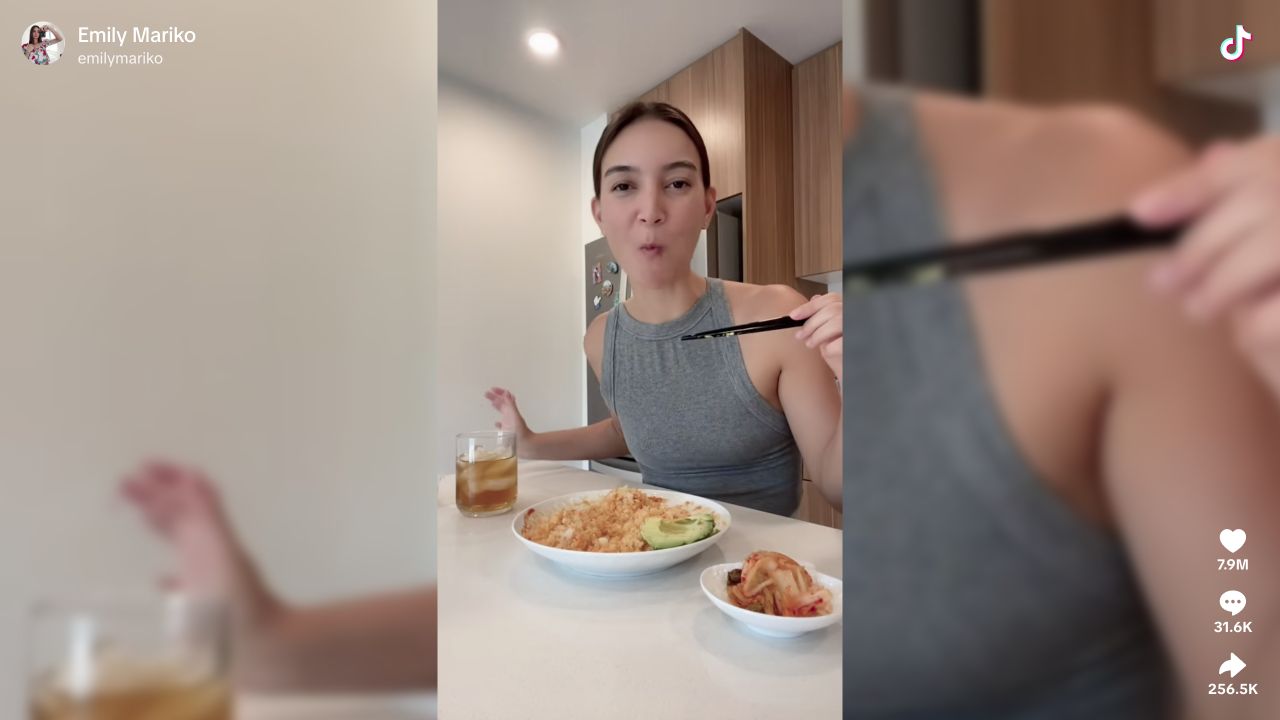
The cooking sequence works with salmon and rice, alongside kitchen preparation.
Our read. Ingredients give the viewer something concrete to follow. For a software demo, start with the actual input: a document, a messy list or a task the audience already recognises.
- 02
Show the transformation
The inspected sequence includes microwave use, avocado preparation and assembly of the bowl.
Our read. The sequence earns its finish through intermediate actions. Removing every step may make a video shorter while also removing the evidence that makes its promise credible.
- 03
Use what you made
Emily eats from the completed bowl, with kimchi visible on the table.
Our read. The closing action answers the practical question. A product demo can do the same by using the output to complete a task, rather than ending on the tool’s logo.
Finish the job on camera.
Original concept for a subscription tracker. A proposal to test.
“I checked which subscriptions I was still paying for.”
- Show on screen
- Use a sample account you own. Show the recurring-charge list, find one forgotten test subscription and demonstrate where a person would manage it. Keep sensitive account details out of the recording.
- Keep the mechanism
- A recognisable starting mess and a final action that resolves it.
- Make it yours
- The audience problem and the proof. A cooking clip is a structural reference, not a finance testimonial.
- What to record
- Log the destination post and the same observation age for each version. Distinguish completion of the video from clicks or actions in the product.
Source & observation notes
Observed refrigerator/freezer access, microwave action, rice over pieces of salmon, avocado being cut, and the finished bowl served with kimchi while Emily eats with chopsticks.
A practical transformation progresses from ingredients to a finished meal. The final eating scene makes the promised result visible.
Documents one recipe demonstration. It cannot establish the number of people who cooked it or purchased ingredients because of it.
Playback started and changing visual sequences inspected on 9 September 2026. Audio and every frame were not independently reviewed. Source checked 2026-09-09. Source 1 ↗
01STORY BRIEFThe idea in three screens.3 SCREENS
A good brief starts with what we want to learn.
An AGD creative brief connects audience, promise, format and hypothesis.
Replace “make a viral video” with “test whether this friction resonates with students revising.” List requirements, freedoms and boundaries. A useful constraint explains its role: the first screen should make the situation visible, not merely contain a keyword.
Add the sentence a viewer should be able to repeat afterward. It is not a mandatory slogan but a comprehension check. If the creative team proposes a better way to convey the idea, the brief should allow it. The document sets the job’s objective without confusing that objective with the first imagined solution. This distinction keeps constraints useful while preserving the creator’s judgment.
A brief should make the review easier before production begins.
Write the audience situation, the claim and the evidence before choosing an effect or a format. A useful brief might ask whether a visible before-and-after helps a certain viewer understand a workflow. A weak brief asks for three viral videos with different hooks. The first gives the team a question it can answer. The second turns every result into an argument about taste, energy or whether the creator tried hard enough.
A brief an editor can review
- 01Question
What do we want to learn about this audience or explanation?
- 02Evidence
What must the viewer actually see?
- 03Boundary
What can change, and what would invalidate the comparison?
Editorial model: a way to reason about the process, not measured platform results.
Include what must stay fixed and what the production is allowed to change. Specify the source material, rights context and the person who can approve the final version. Give examples of the desired mechanism without asking a creator to imitate someone’s identity or reproduce their clip. During review, compare the finished asset with the original learning question. A technically polished video can still fail the brief; a rough prototype can be useful if it resolves a decision before expensive production. Keep that distinction visible in how the team labels and evaluates work.
Emily Mariko's recipe is useful as a reference for a concrete transformation. The reported ingredients and the finished bowl give the viewer something specific to understand and potentially try. Translate that clarity into the brief rather than copying the setting or aesthetic. Name the starting state, the visible action and the result. Add the one detail that makes this example worth showing instead of describing in a sentence. For a software tutorial, that might be the awkward source file or the inspection step that proves the output is usable. The brief should tell an editor where the explanation becomes visible, not merely request an engaging video.
“A good brief starts with what we want to learn.”
02FIELD KITFrom concept to practice.2 SCREENS
Write the learning question.
Adapt this to your audience, budget and test scope.
Put it to work.
- 01Write the learning question.
- 02Define what the creator can choose freely.
Notes & sources.
The limit. An overly prescriptive brief can eliminate the variation the test was meant to explore.
Further reading is linked throughout this article. Worked examples explain a process; they are not campaign results.
THE ORGANIC CLUB is an editorial project initiated by TokPortal. That relationship is separate from the evidence behind claims. Editorial signatures and image credits are explained in our policy. Our editorial policy →