
The payoff is the narrative or practical answer to the opening promise. Its alignment with the hook is checked in the content, not only in a retention curve.
An impossible image earns its explanation
The real post is a useful reference for a visible question and a reveal. We can analyse that structure while leaving retention, rewatching and commercial impact unclaimed unless the creator supplies reliable data.
- FORMAT
- Impossible image → physical reveal
- PRODUCT’S ROLE
- The craft is the subject. The clip does not demonstrate a SaaS product.
A viewer who wants to work out how the image was made.
- 01
Open a specific question
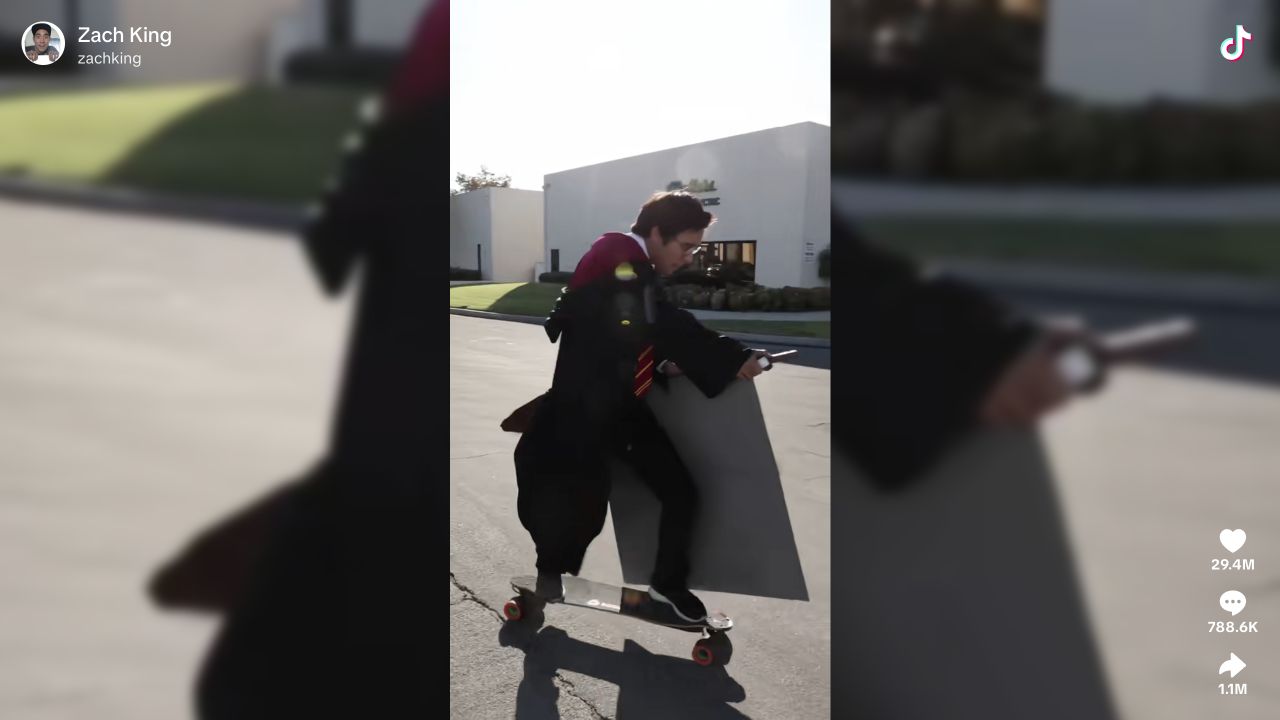
A wizard-costumed rider appears to travel on a broom above the road.
Our read. The visual makes the question legible before an explanation is necessary: what is supporting him? A vague promise to reveal a secret would ask the viewer to supply that curiosity themselves.
- 02
Keep the object in view
The broom, rider and road stay part of the moving scene.
Our read. A reveal needs something to explain. Preserving the object lets the viewer compare the initial impression with the later setup instead of receiving an unrelated punchline.
- 03
Pay the question back
Later frames expose the skateboard and the panel beside the rider’s legs.
Our read. The payoff changes how the earlier image is understood. For a product demonstration, the equivalent is showing the actual action that produced the surprising result.
Make the result strange; make the explanation real.
Original concept for a notes app. A proposal to test.
“This clean meeting summary started as this mess.”
- Show on screen
- Start with your own readable summary beside a visibly messy test transcript. Show the real import, the generated draft and the manual correction of one important detail.
- Keep the mechanism
- One concrete puzzle and a payoff the viewer can inspect.
- Make it yours
- Use a genuine product transformation. Do not fake an instant result with a cut that conceals required work.
- What to record
- Track whether viewers reach the reveal and whether product questions concern the demonstrated job. Record the version of the first frame separately from the underlying concept.
Source & observation notes
Zach King in a wizard-style outfit appears to float along a road on a broom. A later frame reveals his feet on a skateboard and a large panel beside his legs.
An impossible-looking opening creates a concrete question; the later reveal shows the physical setup.
Illustrates a visual hook paired with a reveal. It does not reveal completion rate, rewatch rate or the production cost.
Playback started and changing visual sequences inspected on 9 September 2026. Audio and every frame were not independently reviewed. Source checked 2026-09-09. Source 1 ↗
01STORY BRIEFThe idea in three screens.3 SCREENS

The hook’s promise must be paid back.
The payoff is the narrative or practical answer to the opening promise.
If the opening promises an expensive mistake, show the mistake and how to avoid it. A vague revelation in the final second does not repay the promise. Read the sequence as a contract: what did the viewer agree to by staying? This check may remove a strong but misleading opening.
A simple audit shows only the beginning and asks what a person expects. Then reveal the ending. The gap between expectation and answer helps expose unintended promises. This feedback is not a representative measurement of your market, but it can uncover incoherence before full production. Keep the observed confusion in the brief so the next revision addresses a concrete problem rather than somebody’s vague preference.
Make the ending answer the exact question the opening creates.
A curiosity gap is useful when the viewer can understand what is missing. An object appears to do something impossible. A familiar task produces the wrong result. A claim conflicts with what is visible. These openings create an obligation. If the ending supplies an unrelated product pitch, the audience has been asked to stay for one reason and rewarded with another. A stronger CTA continues the original problem instead of changing the subject at the last moment.
The promise must survive the edit
- 01Open question
The viewer knows what they want explained.
- 02Useful progression
Each moment moves toward that explanation.
- 03Payoff
The ending fulfils the opening before asking for more.
Editorial model: a way to reason about the process, not measured platform results.
Review the opening and ending side by side before approving the middle. State the promise in ordinary language and point to the frame or explanation that fulfils it. If the payoff relies on a detail too small to see, the video has not delivered merely because the editor knows it is there. For an educational piece, consider revealing the basic answer early and using the rest to explain why. Holding attention through understanding can be more valuable than withholding an answer that was never complicated. Test the structure with the audience rather than declaring one universal rule for hooks.
The Zach King reference gives the hook a debt: an apparently impossible action creates a question that the post must answer. That is different from promising a secret and filling the middle with unrelated advice. For a product demonstration, write the debt in plain language before editing. The viewer might be asking how the messy input became a usable output, which step disappeared or what the catch is. Make the payoff show the answer rather than merely repeat the product's name. A useful editing review asks whether the first frame and final explanation belong to the same question. If they do not, the hook has sold a different video.
“The hook’s promise must be paid back.”
02FIELD KITFrom concept to practice.2 SCREENS
Write promise and resolution side by side.
Adapt this to your audience, budget and test scope.
Put it to work.
- 01Write promise and resolution side by side.
- 02Check that the resolution is clearly shown.
Notes & sources.
The limit. Keeping an audience through confusion is not the same as delivering value.
Further reading is linked throughout this article. Worked examples explain a process; they are not campaign results.
THE ORGANIC CLUB is an editorial project initiated by TokPortal. That relationship is separate from the evidence behind claims. Editorial signatures and image credits are explained in our policy. Our editorial policy →



.jpg)