Product discovery content introduces a tool inside an understandable use case. An editorial approach does not remove the need to disclose a relevant commercial relationship.
A product becomes part of an ordinary moment
Watch the role the product plays inside the scene. The example can illustrate contextual presence or a useful demonstration. It does not establish that an incidental product appearance was a planned campaign or caused incremental purchases.
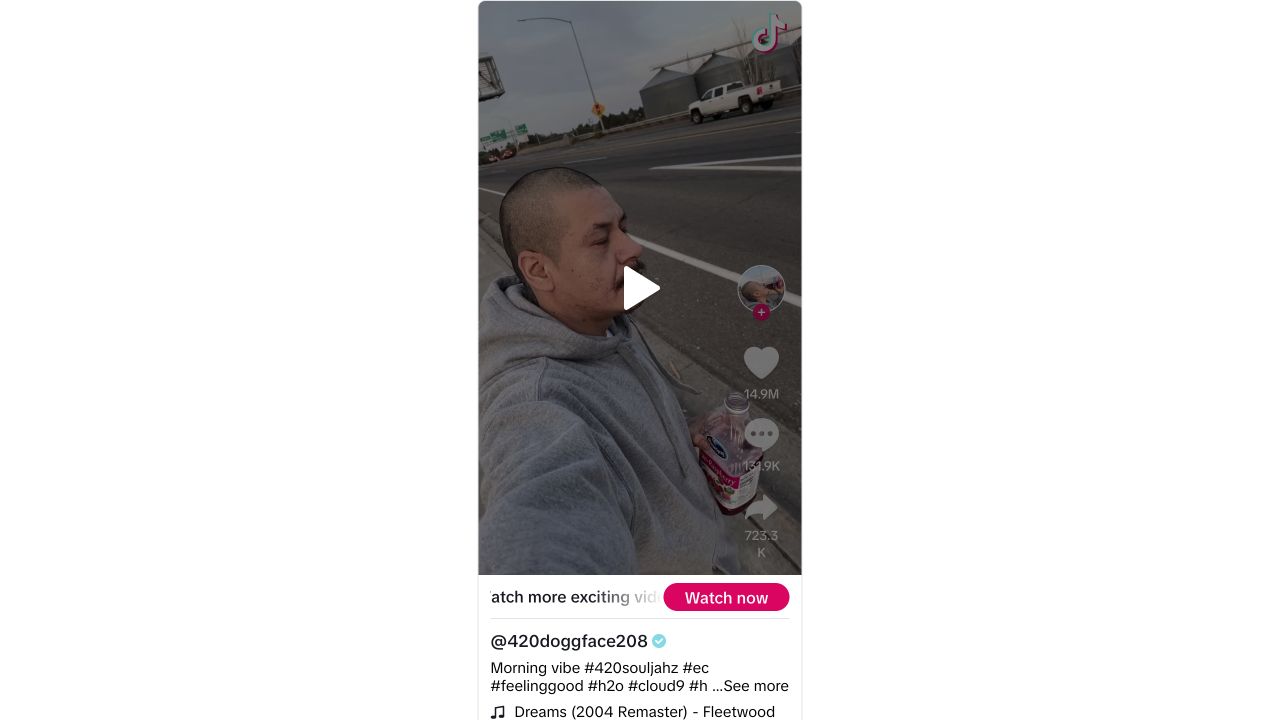
Nathan Apodaca skateboards while drinking Ocean Spray cran-raspberry juice and lip-syncing Fleetwood Mac’s “Dreams”. The player thumbnail visibly shows the creator, roadside setting and bottle.
Make the product legible inside an activity people understand. This is a useful study of context and cultural participation, not a recipe for manufacturing spontaneity.
Source & observation notes
Establishes a concrete creator-led moment later discussed by TikTok. It cannot isolate the sales contribution of this one video or guarantee repeatability.
Source-described; full video not independently watched; public embed thumbnail and identity checked Source checked 2026-09-08. Source 1 ↗
01STORY BRIEFThe idea in three screens.3 SCREENS

The product enters when it becomes useful.
Product discovery content introduces a tool inside an understandable use case.
Show the task before the interface. For a video tool, the subject might be adapting an edit to three formats. Explain what stays manual, what gets easier and where results fail. A demo retaining limitations helps readers more than a context-free feature list.
A complementary tool can appear when the workflow needs it. Google Sheets, for example, can organize ideas before production. Explain its exact role and what information moves to the next step. A logo list explains little; a clearly described transition lets readers repeat the work using their own setup. This gives adjacent products a reason to appear beyond lending credibility to a promotional collection.
Let the object solve the problem already on screen.
A product feels more natural inside a post when it answers the question the scene has already made interesting. A person struggling with a task creates a different expectation from an announcement that a tool is amazing. Show the relevant action: the query being answered, the object being cleaned, the note becoming usable. Keep the interface or physical result legible enough that a viewer can understand what changed without accepting a narrator’s praise.
A demonstration that earns its product moment
- 01Problem
A specific task is visibly difficult or inconvenient.
- 02Action
The product does something relevant to that task.
- 03Result
The viewer can inspect what changed.
Editorial model: a way to reason about the process, not measured platform results.
Draw the scene’s sequence before writing the product mention. Where does the viewer recognise the problem? Where does the product become necessary to the explanation? Where can the result be inspected? If the final CTA introduces a different promise, rewrite it. A product can also appear in an ordinary moment without a planned demonstration, as some creator posts show. Do not turn that observation into a repeatable sales formula. The transferable idea is contextual relevance; the creator’s audience relationship and the circumstances of the original post are not assets you can simply copy.
The Doggface reference is not a conventional product tutorial. It is useful because the product is visible inside an understandable moment, which makes the contrast with forced placement easy to discuss. A software account can look for an equally clear relationship between object and activity without pretending to recreate that cultural event. Show the actual input, the action someone performs and the result they can inspect. Leave enough context for a sceptical viewer to understand what the product did and what it did not do. If the demonstration needs a sentence claiming life-changing productivity before the result makes sense, the example may be too abstract.
“The product enters when it becomes useful.”
02FIELD KITFrom concept to practice.2 SCREENS
Describe the job to be done.
Adapt this to your audience, budget and test scope.
Put it to work.
- 01Describe the job to be done.
- 02Show a real limitation of the solution.
Notes & sources.
The limit. A subtle mention should not conceal who benefits commercially from the content.
Further reading is linked throughout this article. Worked examples explain a process; they are not campaign results.
THE ORGANIC CLUB is an editorial project initiated by TokPortal. That relationship is separate from the evidence behind claims. Editorial signatures and image credits are explained in our policy. Our editorial policy →